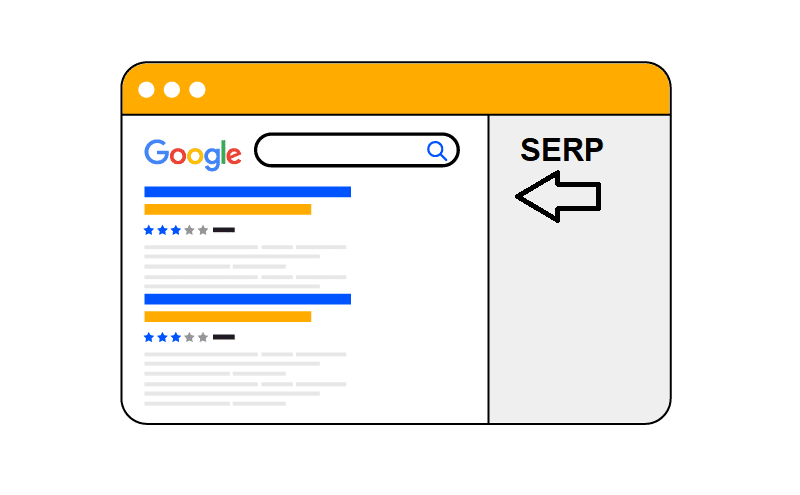
The SERP (Search Engine Results Page), or Search Engine Results Page, plays a crucial role in the online visibility and success of any website.
SEO, or Search Engine Optimisation, is essential for improving a site’s position in the SERPs. In this article, we will explain in detail what a SERP is, why SEO is so important in this context, and how to understand and optimise SERPs to achieve better rankings in search engines. We will also recall the composition of a SERP, which changes more and more with each passing year.
Definition of SERP
SERP stands for Search Engine Results Page. It is the page displayed when you perform a search on a search engine such as Google, Bing, or Yahoo.
SERPs display a list of links to websites, images, videos, local information, paid advertisements, and other types of files that are relevant to the keywords the user has entered in the search bar.
Each SERP is unique, even for searches on identical keywords, because search engines personalise results based on the user’s location, browsing history, and other factors.
The main goal of an SEO strategy is to make a website appear as high as possible in the SERPs for specific keywords, as links appearing at the top of SERPs tend to receive the most clicks.
The Different Types of Search Queries and Their Impact on SERPs
Search queries that determine SERP results can be classified into three main categories: navigational, informational, and transactional.
Navigational Queries
These queries are made when the user is looking for a specific website without entering the full URL. To make the most of these queries for your site, it may be beneficial to invest in ads for keywords related to your business.
Informational Queries
These are made when the user wishes to acquire knowledge, such as getting information on a topic or learning how to complete a task. It is therefore crucial to offer relevant content that meets the interests and needs of your target audience. Multimedia content, for example, can be a powerful tool for attracting traffic from informational queries.
Transactional Queries
These are made when the user is considering making a purchase. These queries have the greatest revenue-generating potential, and high keyword bids for paid placements are common in these cases.
SERPs and Rich Results
SERPs are the pages displayed by search engines in response to a search query. They provide a list of relevant results matching the user’s query.
Rich results, also known as rich snippets, are content extracts that appear in SERPs. They display additional information such as images, reviews, ratings, prices and much more, allowing users to quickly obtain relevant information.
Rich results play an essential role in SERPs. They capture users’ attention and attract more clicks. Indeed, rich results offer better visibility by displaying additional information below the website title in the SERPs.
Explanation of Rich Results and Their Impact on Clicks in SERPs
Rich results are content extracts that are displayed distinctively in SERPs. They give users a quick preview of a website’s content by displaying additional information such as reviews, ratings, prices, and images.
These rich results can greatly influence clicks in SERPs. By providing relevant and attractive information, they encourage users to click on one result rather than another. Rich results also offer better visibility to websites, which can increase their click-through rate.
The Different Types of Rich Results in the SERP
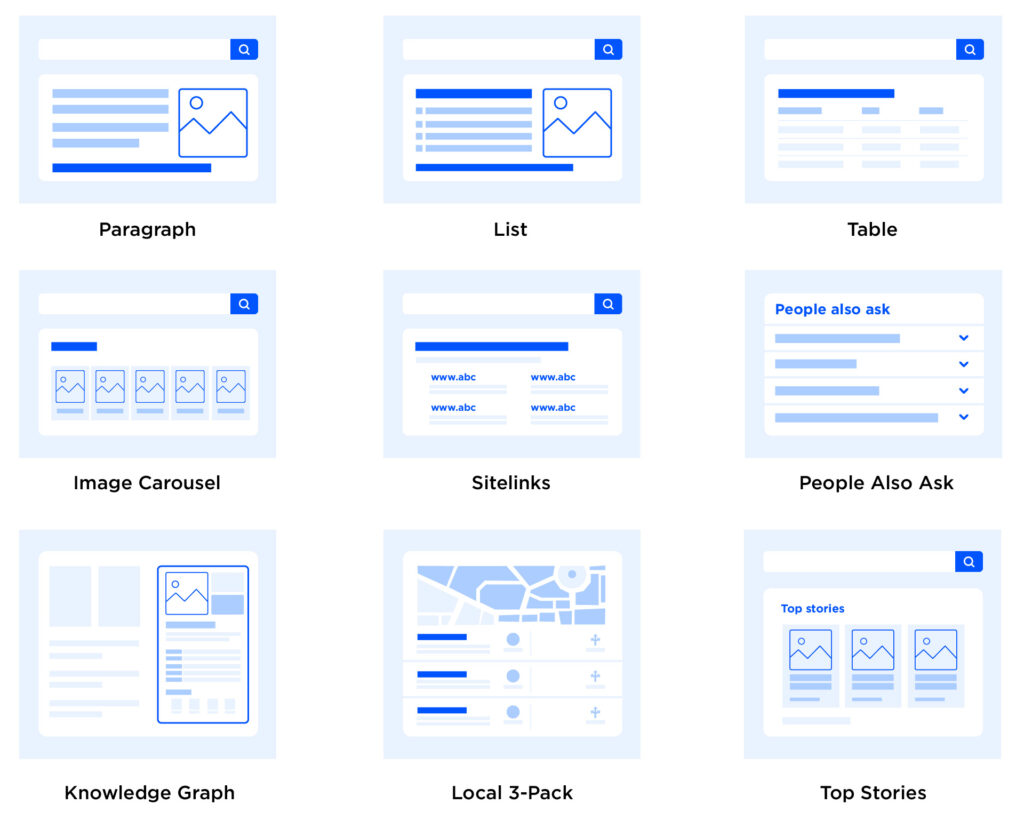
Below is an image showing different types of rich results along with a detailed list.
Google Ads
Google Ads offers immediate visibility at the top or bottom of the SERP, conditioned by the quality of the site and the cost per click.
Featured Snippets
Featured snippets present a relevant summary of sites ranked on the first page.
Image Pack
The image pack displays a selection of images for queries where visual content is deemed useful.
In-Depth Articles
In-depth articles, rich and evergreen content, are valued by Google even when they do not have a dedicated section.
Knowledge Graph
The knowledge graph provides factual information about the topic of the search.
Knowledge Panel
The knowledge panel provides precise information on specific entities such as brands, people or places.
Local Pack
The local pack is displayed for local searches, providing information on relevant nearby businesses.
People Also Ask
Google often suggests questions related to the initial search to allow users to explore the topic more deeply.
Reviews
Customer reviews can appear for transactional queries, directly influencing click-through rates.
Shopping Results
For transactional queries, Google displays relevant products at the top of the page or in a right-hand column.
Sitelinks
Sitelinks direct users to specific internal pages within a site.
Tweets
Google includes tweets in its SERPs for certain current affairs topics or trending discussions.
Videos
Videos appear in SERPs when they are relevant to the search query, and require adequate optimisation to rank.
Understanding Google’s Algorithm for SERPs
Google’s algorithm is a set of rules and criteria used to determine the order in which results are displayed on SERPs. Understanding how this algorithm works is crucial for optimising your content and improving your SERP rankings.
Explanation of How Google’s Algorithm Works
The Google algorithm uses many factors to evaluate and rank web pages, such as relevance, authority, popularity, and content quality. It also uses machine learning techniques to analyse and understand content.
Google uses crawling robots (Googlebot) to browse and index web pages. These robots analyse content, tags, links, and other elements to better understand the subject and context of each page. Google’s algorithm then uses this information to determine how to rank each page in the SERPs.
Tips for Optimising Content According to the Algorithm’s Criteria
To optimise your content according to Google’s algorithm criteria, here are some tips:
- Keyword research: Conduct in-depth research on relevant keywords for your content. Use keyword research tools to find popular and well-targeted terms.
- Quality content: Create unique, informative, and high-quality content. Avoid duplicate or low-value content. Ensure your content answers users’ questions and provides real added value.
- Markup structure: Use H2, H3, p, ul, li, and strong tags to organise and structure your content. Use relevant heading tags to highlight the different topics covered.
- Tag optimisation: Use relevant and attractive title tags and meta descriptions for each page. Include relevant keywords while remaining natural and appealing to users.
- Internal linking: Use internal links to connect your content logically and provide a better user experience. This also helps Google understand the structure and context of your site.
Why Is SERP Analysis Crucial for SEO?
SERPs are much more than a list of links. They reflect the criteria that search engines use to determine which content is most relevant for a given query. By analysing SERPs, SEO experts can infer which factors are considered important by search engines, whether it is content relevance, backlink quality, domain authority, or other SEO elements.
Moreover, SERP analysis helps identify keyword opportunities, understand users’ search intent, and discover how competitors manage to rank well. In short, SERP analysis is like reading the terrain in the ever-changing SEO landscape.
How Can SERP Analysis Improve Your SEO?
- Identify trends: SERPs can reveal trends in the search engine algorithm. For example, if pages containing videos frequently appear for certain queries, it is likely that the search engine considers video content relevant for those queries.
- Understand search intent: SERP results can help deduce the user’s intent behind a query. For example, if the top results for a query are mainly guides or tutorials, this indicates the user is probably looking for detailed information or instructions. Alternatively, if most are YouTube videos, a YouTube video will be necessary if you wish to rank there.
- Keyword research: SERPs can help you discover new relevant keywords for your content. By observing which keywords lead to SERPs where your content ranks well, you can find other keywords to target.
- Competitive analysis: By examining SERPs, you can identify who your main competitors are for a given keyword and analyse how they achieved a good ranking.
- Impact of SERPs on CTR and traffic: Changes in SERPs can significantly affect click-through rates (CTR) and a site’s traffic. A good SEO strategy must therefore include SEA efforts to increase SERP visibility as well as optimisation of title tags and meta descriptions.
- Competition and user intent: Rich SERPs increase competitive diversity. It is therefore crucial to analyse major competing platforms and produce content that matches their offerings. Moreover, it is essential to understand users’ search intent at each stage of the conversion funnel and to address them effectively.
- Impact on monitoring: With SERPs constantly evolving, continuous traffic monitoring is necessary to understand changes in user search intent and to adapt accordingly.
- Frequently asked questions: This is EXCELLENT for content topic ideas or for enriching your content with PAA (People Also Ask).
- The SERP of tomorrow: Google will increasingly emphasise visual and video search in the future, which will be an important lever for maintaining SERP visibility. Additionally, the integration of AI into SERPs (such as Google Bard) will be a challenge for tomorrow’s SEOs. I believe that generic definitions and articles will hold little interest, and Google will rank content with high added value and visual quality higher on its first page.
How to Optimise Your SERP Visibility by Appearing as Rich Results
To optimise your content and increase your chances of appearing as rich results in the SERPs, here are some best practices:
- Use structured data: Use structured data markup tags such as Schema.org to indicate to search engines which information is important and how it should be displayed.
- Use compelling title and description tags: Write attractive and relevant titles and descriptions to encourage users to click on your result.
- Optimise your images: Use alt tags and detailed descriptions for your images to improve their visibility in the SERPs.
- Be relevant: Provide high-quality content that meets users’ needs, focusing on keywords relevant to your business. By following these best practices, you increase your chances of appearing as rich results in the SERPs, which can significantly improve your visibility and click-through rate.
Conclusion
SERP analysis is an essential skill for any SEO expert. It provides valuable insights that can guide your SEO strategy and help you optimise your content for better rankings. By understanding and leveraging the information contained in SERPs, you can stay one step ahead in the SEO game.