
Do social media really help improve a site’s SEO? Is it SEO? It is a debate that has existed for around ten years, yet the answer is simple and not as complex as it might seem.
Are Social Media a Direct Ranking Factor for Google?
According to Matt Cutts, former head of Google Webspam, Facebook likes, Twitter followers, Instagram shares and the like do not affect search rankings. That is, among the famous approximately 200 criteria that the algorithm includes, social media are not among them. Is the answer to this question really that simple?
Yet SEO professionals have seen web pages jump to the first page following a multitude of social media shares. It is not black and white — it could also depend on the content; if it is news or not, it might be treated differently. This is intrinsically linked to artificial intelligence algorithms.
As for Bing, its positioning (yes, I am making puns) is much clearer. Indeed, it states in its webmaster guidelines that: “social media play a role in today’s efforts to rank well in search results… These positive signals can have an impact on your organic ranking in the long term”. Put more clearly, Bing uses social network signals such as likes and shares to better position a page. Do not underestimate Bing for your visibility! In France it represents 12% of market share on desktop.
In any case, social media will allow you to rank better in Google search results. Why? That is what we will look at next.
Social Media, a Direct Ranking Factor According to Moz
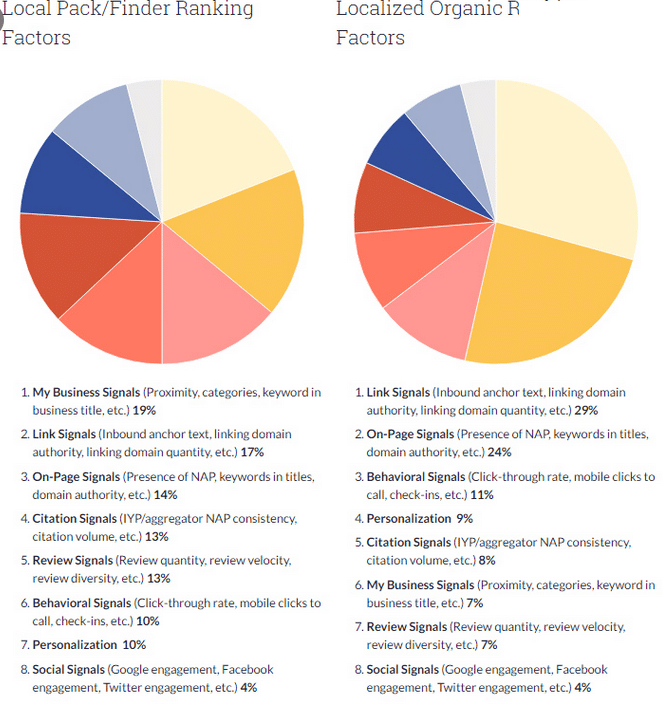
A study published by Moz indicates that social network signals such as sharing and likes directly impact local SEO. I should clarify — social networks that can be crawled by bots.
Social Media, an Indirect Ranking Factor for Google
Every eyeball that social media can bring you is an indirect ranking factor for Google search results, for two main reasons:
- Brand. Improving your presence and brand image will inevitably increase the number of brand searches on Google and improve your site’s ranking.
- An eyeball that likes your content on your social networks may talk about you on their site and bring you backlinks or mentions, which directly impacts your natural SEO on Google.
There are also other indirect factors that can in turn impact Google’s ranking factors. We can also note that in the future Google could use social media as a ranking factor. After all, in a video published in December 2010, Cutts himself stated that social signals were a ranking factor.
Put differently, social media may not be a ranking factor for Google, but in any case they indirectly amplify ranking factors that are taken into account by Google.
On the other hand, do not rely too heavily on TikTok to improve your ranking — or at least the impact will be less significant than a social network regularly crawled by Google’s bots.
Matt Cutts (2014): “Facebook and Twitter pages are treated like any other pages in our web index, and so if something is happening on Twitter or Facebook and we can crawl it, we may show that in our search results.”
Optimising Your Social Media for SEO
First of all, optimise your profiles. If you use multiple social networks, maintain a consistent image across each of them for better brand recognition. Make sure your bio is relevant to your business while being interesting enough to capture attention.
Include a relevant link. This will probably be your website, but it could also be your email newsletter sign-up page or something else. Do what seems most beneficial to you without thinking about your SEO.
1. Post Regularly
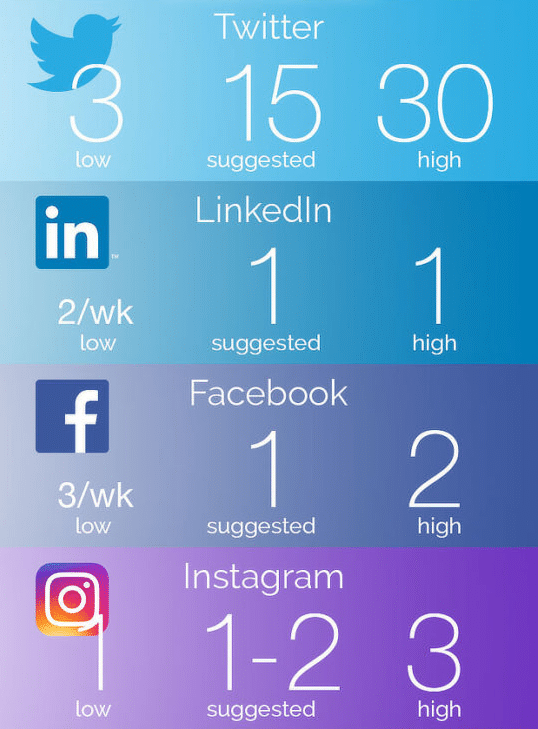
Make sure your account(s) are active. Post regularly, participate in discussions, answer questions and connect with other businesses / people in your field.
However, keep in mind that:
- There is no ideal time to post — it depends on the social network but also on your field. While you can read many articles giving an ideal time to post, you should instead experiment for yourself and see which works best for you.
- Posting regularly should be subject to doing it properly.
- Also, on Twitter it is common to post multiple times per day — yes, multiple times per day. On the other hand, posting multiple times per day on LinkedIn would be very irritating for its users.
2. Optimise Your Posts for Sharing
If you want your social media posts to go viral, it is crucial to optimise them for sharing.
For this it is recommended to:
- Create irresistible titles
- Use eye-catching images
- Do not hesitate to encourage sharing
- Add hashtags
Hashtags do indeed help with SEO (within the social network). They help you categorise your content and help users of that network find it.
It is still important to remain cautious with hashtags. Furthermore, their usage varies from one platform to another. On Facebook, they are barely used at all, whereas on Twitter they are everywhere.
3. Optimise Your Site for Social Networks
You can also optimise your website to encourage visitors to share your content and gain more followers.
Creating high-quality content on your site that encourages social sharing, reactions of any kind, while ensuring you optimise the content’s keywords, titles, calls to action (CTAs), and images, is the equivalent of magic.
So add social sharing buttons to all your content: the easier it is to share, the more likely people are to do it. You can also simply display your social networks or even encourage your readers to visit your networks within your content, with or without a call to action. For example, nothing stops you from putting at the end of your article “Do you have questions? Leave a comment or send me a ping on Twitter!”
4. Be Present on Every Network?
Whether we take the Bing search engine into account or not, the ranking factors that social networks can bring do not lie in the links you can add to your description or simply keywords in a post. What is important is building a loyal audience to collect ranking factors that will be direct ones. As for Bing — getting shares and likes.
Moreover, it is completely pointless to manage all social networks just to have lots of keywords and lots of links everywhere. What matters is creating an audience and keeping them engaged. Put explicitly, targeting a single social network is probably the best idea (or 2 or 3, but not 7 or 8). If you spread yourself too thin, you are more likely to get fewer shares — and in that case, if you are doing this for your SEO, it no longer makes sense.
5. Backlinks? The Final Word
Mentions — that is, someone talking about you without adding a link — are taken into account by Google, especially for local search with NAP mentions (name, address, phone).
Mentions through social networks are something you can obtain, especially as they are well crawled by Google’s bots. It is also possible to gain backlinks naturally through your posts. Social networks can be seen as a link building strategy in their own right — provided you understand why.
For beginners, I am talking here about connected individuals on social networks who would go on to create an actual link on their own sites. Because even if it is possible to share links on social networks pointing to your pages, know that Google devalues these types of links and attributes very little juice to them.
That said, there is no reason not to use social networks as a vector for your natural SEO — especially since the potential for viral reach is enormous. A piece of content that resonates on social media can generate hundreds or even thousands of new visitors, some of whom will naturally cite your content and create backlinks pointing to your site. This virtuous circle is one of the strongest indirect benefits of an active social media strategy for your SEO.
In conclusion: social media are not a direct ranking factor for Google in the traditional sense, but they generate enough indirect effects that ignoring them would be a strategic mistake for any site that wants to develop its organic visibility. Focus on quality, consistency and audience building rather than volume of posts.