I don’t specifically recommend buying links — it should simply come as a complement to support and maintain a natural link building strategy. That said, it depends on your niche, as it’s not always possible to do things the way we’d like.
When to Buy Links on Netlinking Platforms
If you offer great content — or better yet, a useful tool that people love and use, or a unique shareable image — you can sometimes earn tens of thousands of natural backlinks.
On average, a “decent link” costs €100. Which adds up to over a thousand euros per set. That’s why investing in an illustrator for your articles, or a developer to create a tool, is far more lucrative and effective.
However, before earning natural links, you need traffic. And your site won’t be visible without already having some backlinks.
For example, in our article on netlinking, we recommend using social media and Google Ads to generate traffic — which indirectly activates off-site SEO, i.e., natural link building. But there’s no guarantee this will result in natural links — especially if you’re not skilled at Ads optimization. Plus, it’s not easily measurable and remains unpredictable.
Other methods include guest blogging — writing guest articles. But all these natural link building techniques remain largely unpredictable, quite tedious, and you waste a lot of time while competitors are simultaneously building hundreds of equally powerful links.
That’s why it’s very often necessary to buy links to start getting visibility on Google. Moreover, depending on your activity domain and the keywords you’re targeting, obtaining natural links can be much more challenging.
Imagine you sell concrete blocks. How would you realistically get natural links? Honestly? It’s impossible. You have to buy links.
Now take the example of the SEO blog from webrankinfo. Their H(n) tag architecture analysis tool — which is excellent, by the way — has received hundreds of natural backlinks from abondance.com, prestashop.com, commentcamarche.com, etc. These are very high-quality links, in large quantities — simply because the tool is good and useful.
Is building such a tool difficult? Not really. And buying a link from Prestashop would certainly cost much more (that’s an understatement).
Combining Natural and Paid Links
A good link strategy — where possible — is to combine paid and natural link building. In any case, once you’re ranking for multiple keywords on Google’s first page, paid link building won’t be as necessary. Or at least, not to gain link juice — perhaps just for branding by buying links on major media sites. But let’s not get too far off topic.
Is Buying Links Legal?
Buying links is legal but doesn’t comply with Google’s guidelines. In reality, just like adding words to optimize page semantics, or alt tags crammed with keywords, it also doesn’t comply with Google’s guidelines. In fact, almost nothing is truly compliant — but we all do it.
Is it risky? It depends. You need to do it correctly: use varied, non-over-optimized anchors, avoid buying links from spammy sites, and stay away from PBNs. But you also don’t need to be the perfect link builder. Would you find it natural for a site to have only six backlinks from Le Figaro, Vogue, and the government tax site? Your imperfections make you look natural.
In any case, most of these platforms offer free SEO expert guidance to help you implement your paid link strategy. So don’t worry — if you’re not sure what you’re doing, ask them for support.
Note: To optimize your backlink budget and avoid PBNs that can be listed on platforms — among other things — I strongly recommend working with a dedicated SEO expert. This also prevents building links on a site with a poor SEO foundation.
Top 5 Best Link Building Platforms
There won’t be a ranking from first to fifth. The platforms are listed not by quality, but simply in the order I’ve chosen. In fact, they all have their advantages and disadvantages. Think about which platform suits you best.
Nextlevel
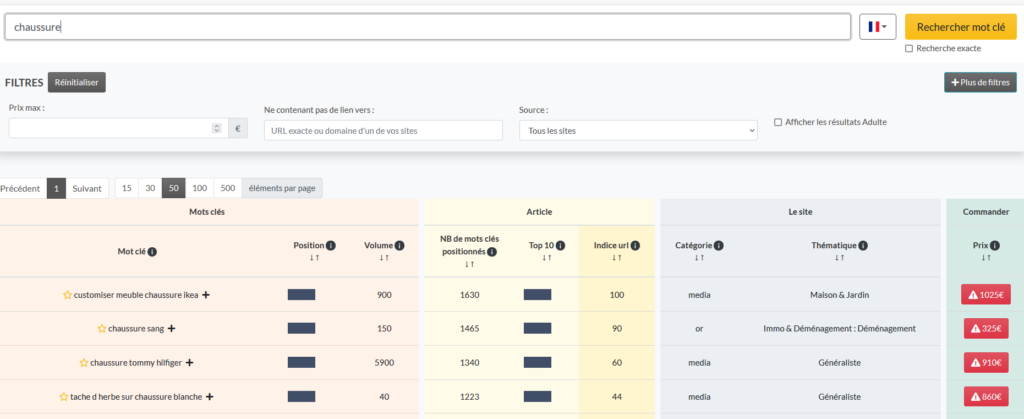
Nextlevel is one of the best link building platforms. In principle, links come from pages already ranked for keywords. It’s a catalog-based netlinking platform: you choose a link that already ranks for a keyword. You’ll also get access to a rank index for the URL and its topic.
The SEO guidance is, in my opinion, more in-depth than what SemJuice offers, for example. However, the catalog isn’t very SEO-expert-friendly. Ideally, you’d be able to know the URL of sites you’re potentially interested in to run your own SEO analysis tools first.
Pros: Ideal for both beginners and experts. Excellent hands-on SEO support.
Cons: URLs are not disclosed before publication.
SemJuice
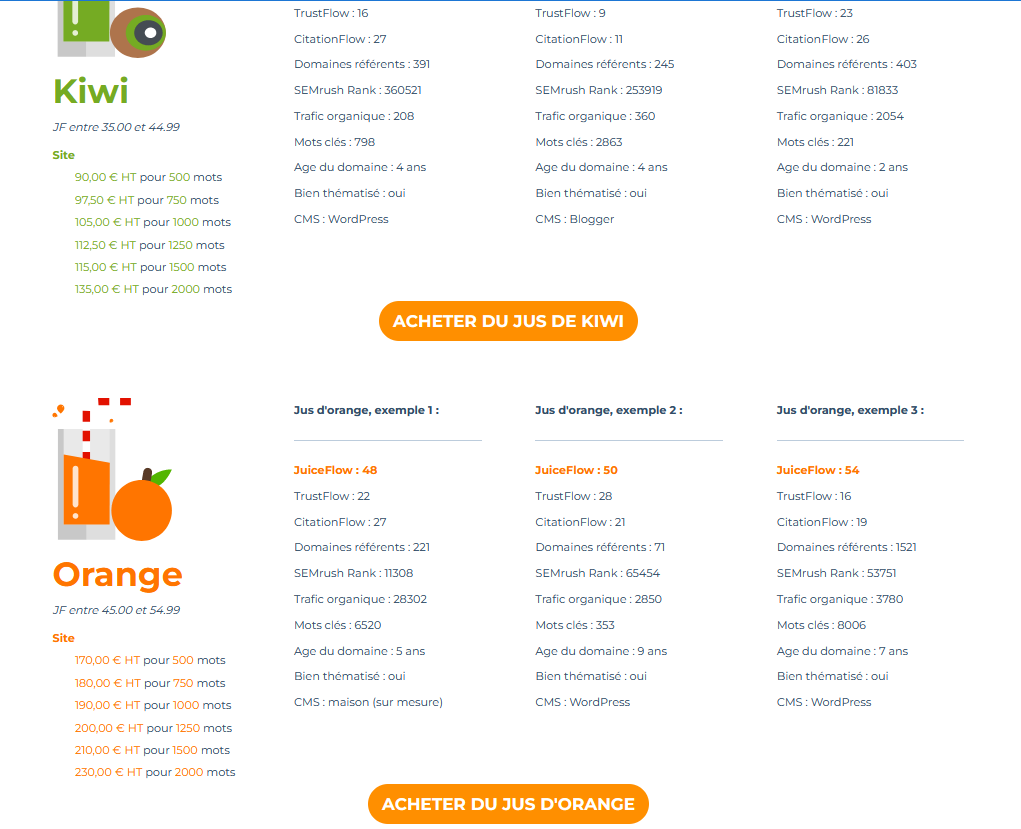
SemJuice, like Nextlevel, is a must-have for beginners. Better than Nextlevel? It’s different. You’ll probably feel better supported, and communication will be clearer (as opposed to the more technical SEO jargon used by Nextlevel’s specialists). If you’re new to SEO, I’d recommend contacting both companies to see which one makes you feel most comfortable and seems most suited to your niche.
In any case, SemJuice is truly peace of mind.
Pros: Very simple — saves a lot of time since you don’t have to do anything.
Cons: Very hard to optimize your link strategy since you don’t really control it — they handle everything for you. They don’t offer a catalog either. You buy “packages” — for example an orange (a mid-to-good link, ~€200) — and they handle the link placement, choose the anchor text and the site.
LinksGarden
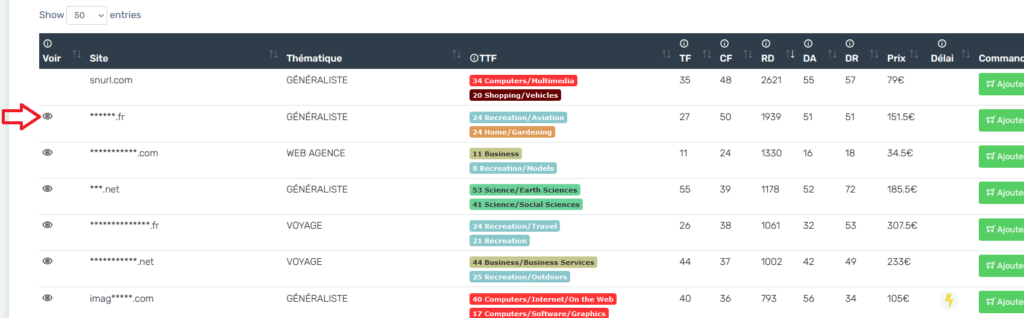
LinksGarden is probably one of the best platforms for advanced SEO professionals. You get a full catalog with Majestic metrics to evaluate domain/URL quality as well as Ahrefs Domain Rating. You can also click an icon to display the URL — which lets you evaluate URL quality using your own tools.
Once you’ve chosen the URL, LinksGarden handles everything else — unlike Rocketlinks for example. They’ll place the link based on the requested anchor, no questions asked.
Pros: Everything you need in terms of metrics — TF, CF, DR… and you have access to page URLs. Once the site is chosen, they handle article writing and link placement. The catalog displays URLs, and you can either create new articles or place a link on an already-ranked article.
Cons: There’s not really a downside, except perhaps a lack of publisher sites covering more niche-specific topics.
Getfluence
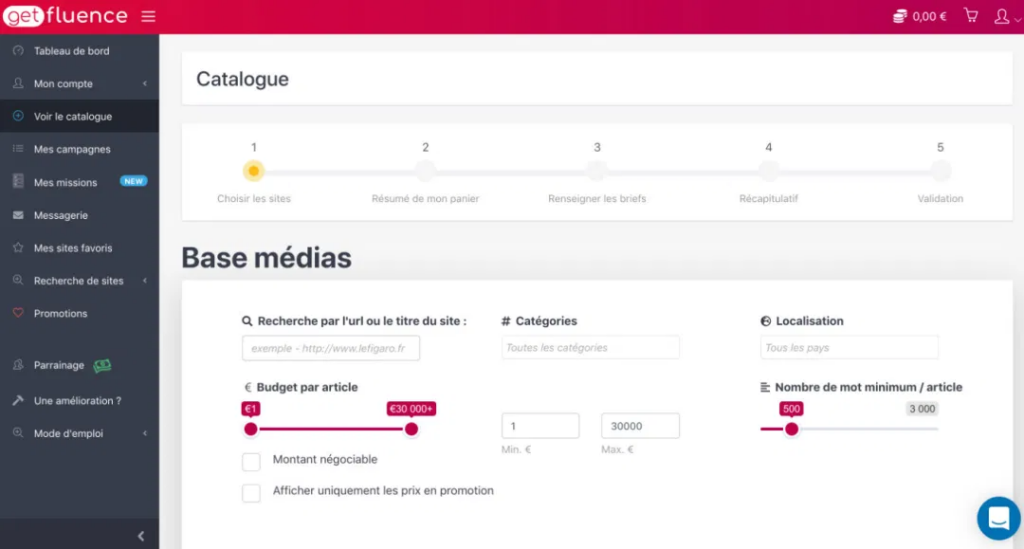
Getfluence is a somewhat special link building platform. It focuses heavily on branding and purchasing links from major media websites. It’s a dual-purpose strategy: you earn good SEO link juice while also gaining authority with your audience. However, most links will be on the expensive side.
Pros: A catalog of major media sites — probably more comprehensive than competitors. They prominently feature sites like Le Monde, Doctissimo, BFM TV, Aufeminin and many others.
Cons: A dofollow link from Le Monde costs a lot — a very, very lot.
Rocketlinks
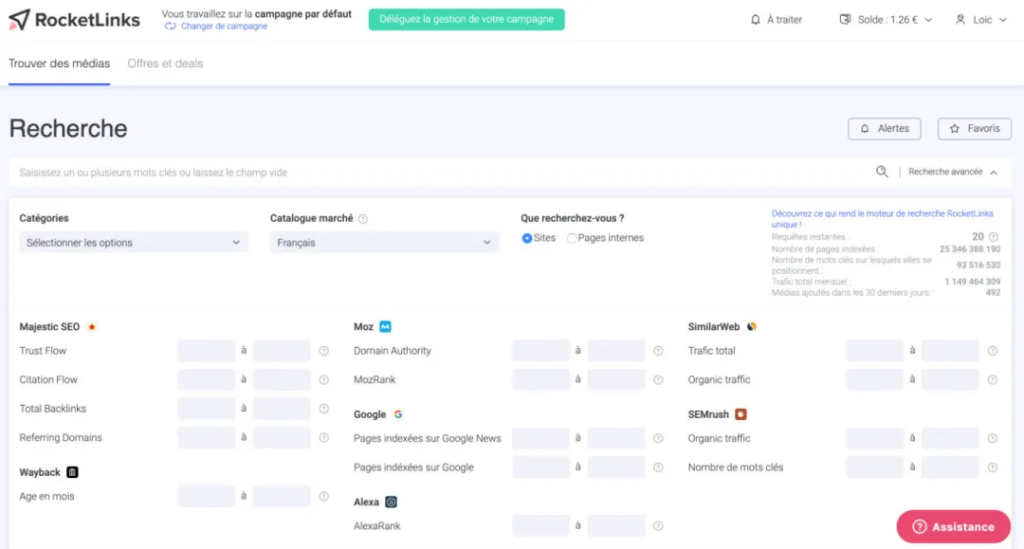
Rocketlinks is a personal favorite — it’s a link building platform that also enables e-reputation work, branding and qualified traffic. You can even choose links outside of France to optimize your presence in Belgium, Quebec, or even other non-French-speaking countries if you have a multilingual site.
Pros: Rocketlinks is very professional — I’d have no hesitation delegating a link building campaign to them. They verify that links remain in place. There are many little things you’ll appreciate: contacting publisher sites before paying, catalog filters, and much more. The catalog displays URLs — and you can either create a new article on the site or place a link on an already-existing article.
Cons: Unlike LinksGarden, publisher sites are not “obligated” to accept your link placement even after payment. They can refuse — and from my experience, they often do. After spending hours calculating the best sites, computing induced strength by factoring in link price, DR, URL trust, positioned keywords, etc. — only for the publisher to refuse the link placement — can become very frustrating very quickly.