
Semantic analysis — also called semantic keyword research or semantic field analysis — involves finding keywords related to your primary keyword. Concretely, it means identifying synonyms, keywords with the same search intent, related entities and the overall topic.
That’s exactly what we’ll cover in this article.
What is Semantic Analysis?
Semantic analysis is an approach that SEO professionals developed for more “logical” keyword research. Before semantic search became the norm, it was enough to choose a keyword and stick to it. Today, keyword research is very different. Adapting to how search engines now display results is important. Semantic analysis therefore involves researching semantic keywords for your primary keyword — but also the topics that gravitate around it and its entities.
How to Conduct a Good Semantic Analysis
The first step is to determine the primary keyword you want to target. For this, you can use any standard keyword analysis tool like SEMrush or Ubersuggest.

The second step is to look at keyword ideas:

As well as related keywords — you can also look at “questions”:

At this stage, it’s important to understand that semantic analysis is intimately linked to semantic writing — because to optimize for algorithms like Hummingbird or Neural Matching, you embed various synonyms and related keywords that are semantically close.
The process for identifying traffic keywords and their related keywords during semantic analysis is nearly identical — you get two benefits for the price of one.
The idea here is to use semantically similar keywords in H2 heading tags, since they share the same search intent. If you have any doubts, verify this by checking search results — if different keywords return the same pages, your semantic analysis is working correctly.
Analyzing the Topic/Concept Behind Your Primary Keyword
Now, the goal is to understand the topic and concept of your keyword and what gravitates around it.
One of the easiest ways is to use SEOQuantum — you’ll get a small thematic cluster related to your primary keyword:

Analyzing the Entities of Your Keyword
Now it’s time to determine the entities related to your topic/primary keyword. To do this, you can use the Google Knowledge Graph API or free tools to explore the KG — like Merkle or the Knowledge Graph Checker tool.
Let’s see what Merkle shows for our query:
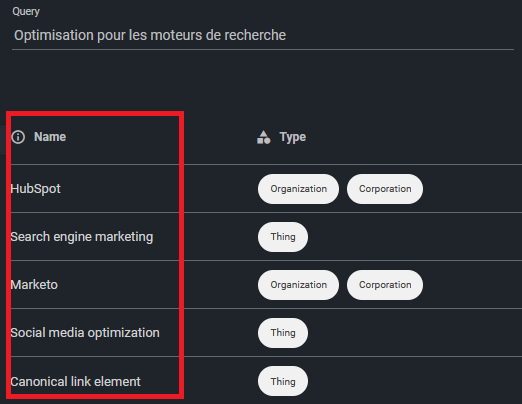
You can also use synonyms and acronyms — let’s see with our own tool:
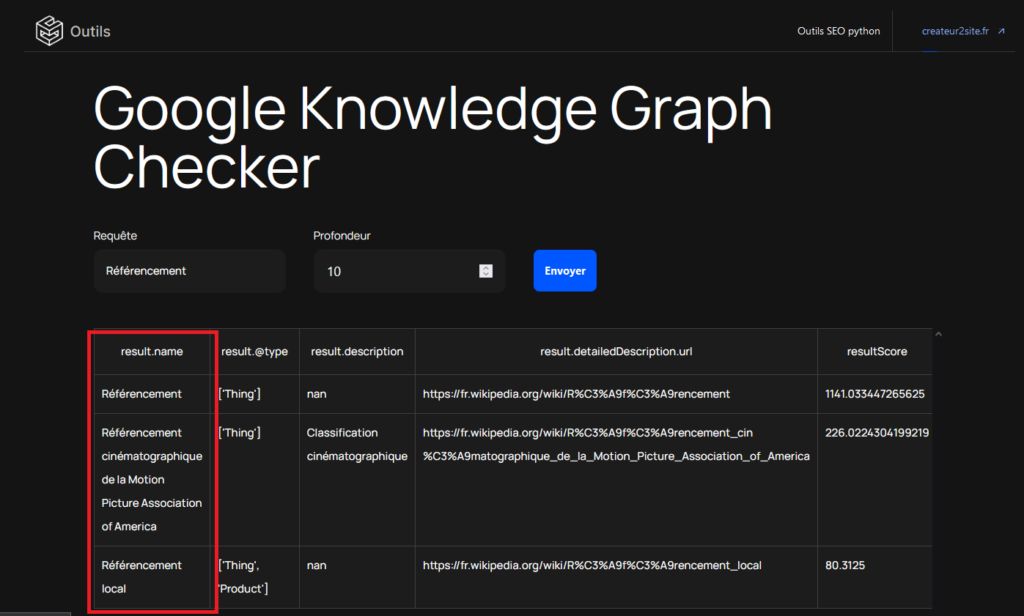
However, the KG is not very helpful for many concepts.
We therefore recommend using Wikipedia to find your potential entities — because Google uses Wikipedia articles as entities. That’s also why entities in the Knowledge Graph have associated Wikipedia pages.
You can type your primary keyword into Wikipedia and look for related articles, or use the Wikipedia Topic Graph tool:
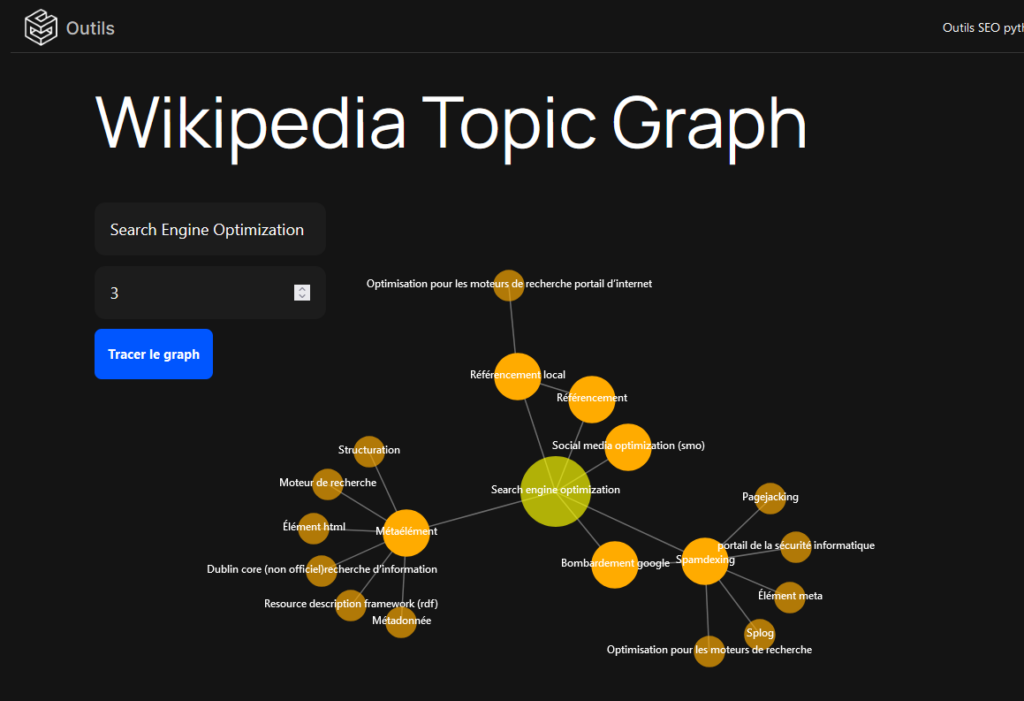
Here is the Wikipedia cluster for our query — giving you an entity cluster for your topic/primary keyword.
Don’t hesitate to increase the node depth if you don’t have enough entities.
And there you have it — your semantic keywords, entities and concepts.
Best Tools for Semantic Analysis
We’ve covered traditional tools above, but more powerful tools exist specifically for semantic analysis.
inLinks.net
inLinks is the dedicated semantic SEO tool — and therefore also a leading semantic analysis tool.
Once the analysis is complete, it will show you all the keywords associated with your primary keyword:

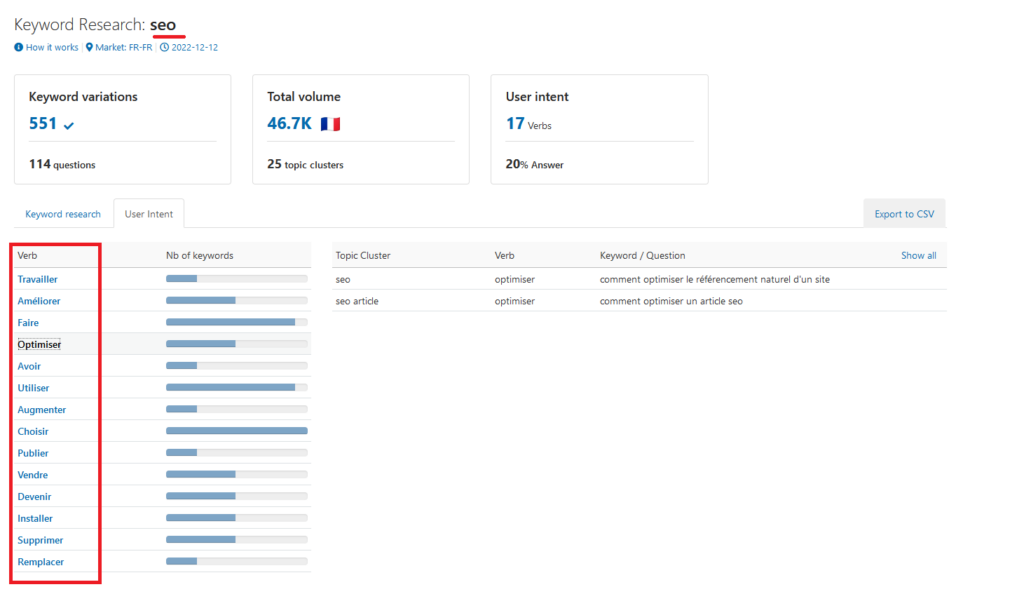
You can also see search intent — once clicked, you get the verbs associated with each intent. Once a verb is selected, you get the associated keywords, questions and topics:

Try related synonyms, abbreviations, etc. For example, “SEO” will work better here than “search engine optimization.”
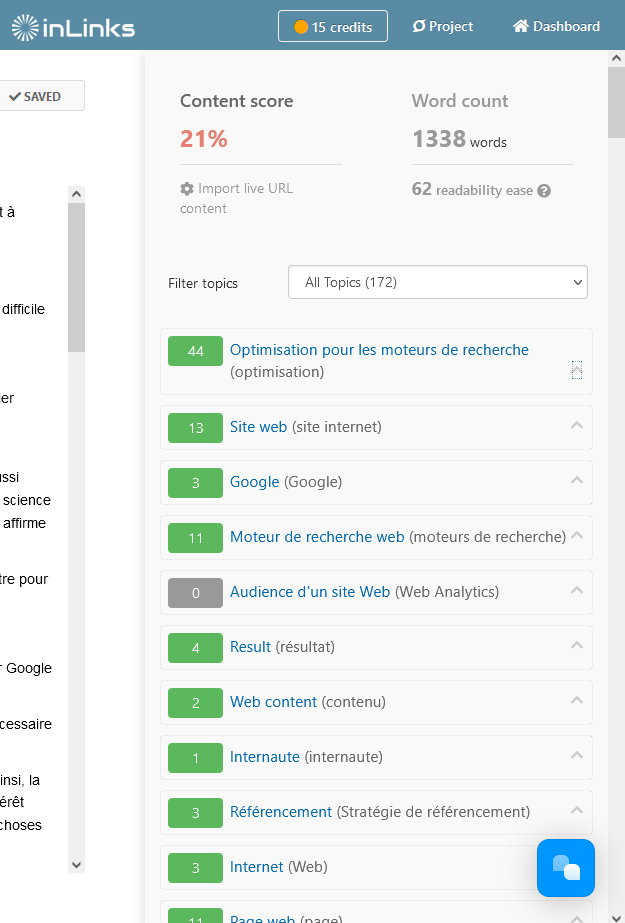
Once you start writing, inLinks helps you target the right topics and subjects:
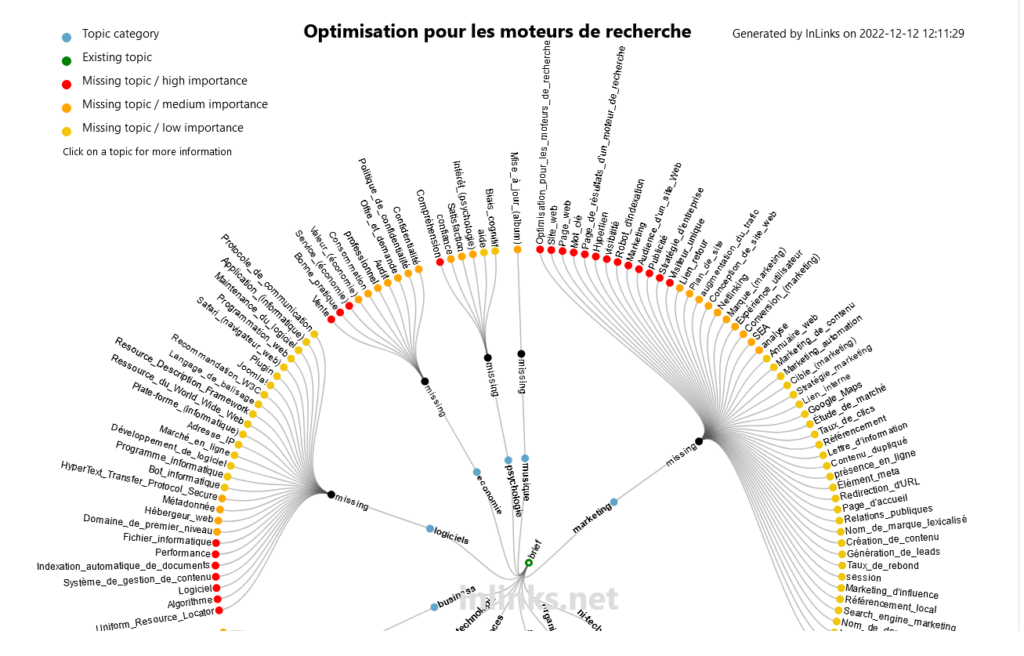
You’ll also get a related topic map and much more:
AlsoAsked
AlsoAsked is a good tool for identifying semantically related questions to your primary question or keyword:

Other Semantic Analysis Tools
Here is a non-exhaustive list of tools that can help with your semantic analysis:
- WordLift
- YourTextGuru
- Cocon.se
- Google Docs
- …
Summary: How to Succeed at Semantic Analysis
When conducting a semantic analysis, pay close attention to search intents — including multiple intents and micro-intents.
Also make sure to write for a topic/subject — creating the right number of pages to strategically link together.
Remember that keywords ranking for the same intent should be covered within the same piece of content.
And finally, don’t forget entities. Find all the entities that belong to your topic. Most will be nouns — ideas, places, people, things, dates…
Use a mindmap to plan, then write your articles with semantic writing in mind and publish.