
Now that we’ve introduced marketing to SEO, it’s time to put theory into practice. To start building a semantic cocoon, you first need to define your buyer personas.
What is a buyer persona?
A buyer persona is a fictional person that represents your target customer.
It allows you to put into words who your target clients are — in order to better reach them.
Simply segmenting between B2C and B2B is not enough.
Describing your customers as precisely as possible helps you know who you’re writing for. It lets you better define your content ideas, refine your conversion funnels and write in a way that speaks directly to them.
If you try to target everyone, you target no one.
How to create your buyer personas?
To define your buyer personas, you need to start by asking yourself the right questions. Here is a non-exhaustive list of elements to specify:
- What is their role in the company?
- Where are they located geographically?
- What are their main challenges? What are their frustrations?
- What are their goals?
- How do they communicate?
- What type of content interests them?
- How do they make purchasing decisions?
- What are their barriers to buying?
- What brands do they love?
- …
Start by thinking about your current clients and what they generally have in common.
Creating personas with templates
There are templates and tools to help you define your personas. It is recommended not to create more than 4 different personas. The most well-known free tool is Xtensio — here’s what it looks like:
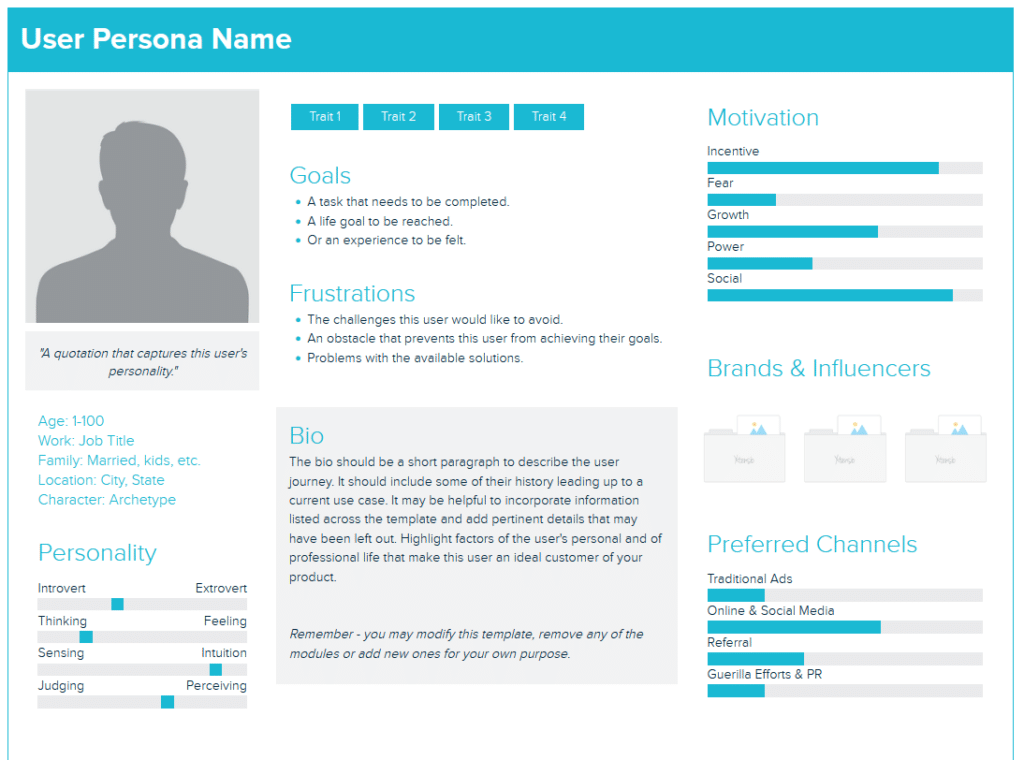
The more detailed the persona, the better the targeting. Don’t be afraid to push the sliders to extremes and define real personalities rather than placing everything in the middle — otherwise, your personas may not serve any real purpose.
Going further
Creating personas is the most important step when building a semantic cocoon. But there’s nothing stopping you from going further. The more correctly you do things from the start, the better your site will perform.
Define your value
Building a site should never be done randomly. Once you know your target clients through your personas, you can speak for them — your writing should reflect their needs, and your design should resonate with the sensibilities you’ve defined. But it’s worth going even further.
Defining the value of your brand helps you better visualize your future internal linking structure. It also helps when briefing your writers, establishing a brand identity and much more.
The essential element for defining your value and brand is your UVP (Unique Value Proposition). The UVP is composed of three elements:
- Relevance: explain how your product solves customers’ problems or improves their situation.
- Quantified value: offer specific benefits.
- Differentiation: tell the ideal customer why they should buy from you and not from the competition.
The UVP is not a slogan.
For example, Evernote’s UVP is: “Tame your work, organize your life. Remember everything and tackle any project with your notes, tasks, and schedule all in one place.”
Note: Since UX is closely connected to SEO and digital marketing more broadly, ideally use UX techniques like A/B testing to validate your theories — including to determine whether your UVP is actually good, mediocre or poor.
Use other marketing techniques
Personas and the UVP are starting points in marketing.
However, if I go further I risk losing you — and you won’t follow through. For the most motivated, here are some additional directions to explore:
- Who are you? What’s your story?
- What if we didn’t exist?
- Make a list of adjectives that precisely describe your brand
- Define a direction for your brand personality
- …
Summary
Working as thoroughly as possible on the points mentioned above will help you better define your mindmap and keyword targeting. Once done, it’s time to move on to creating that famous mindmap in UX & marketing mode. That’s the next chapter.
Next chapter: Creating your mindmap in UX & marketing mode for your semantic cocoon